1
Best Overall
Golvia 30 Golf Rangefinder 1200 Yards
★★★★★
9.7

Golvia 30 Golf Rangefinder 1200 Yards

1200-yard range with 7X magnification and ±0.5 yard precision
Adaptive slope technology with dedicated on/off switch for tournament legality
Ultra-strong magnetic mount snaps to cart frame for instant access
Read full review →
109.99
Check Price
Save $10 with coupon
2
REDTIGER GolfVue 1 Pro Rangefinder
★★★★★
9.5

REDTIGER GolfVue 1 Pro Rangefinder

1200-yard range with 7X magnification and ±0.5 yard accuracy
Built-in magnetic bracket attaches to cart or belt buckle
6 measurement modes including slope, speed, and continuous scan
104.48
Check Price
Available atamazon
3
REDTIGER Mini Golf Rangefinder IP65
★★★★☆
9.3

REDTIGER Mini Golf Rangefinder IP65

Ultra-compact at 0.29 lbs — lightest in category, one-hand operation
IP65 waterproof rating handles rain without concern
1200-yard range with 7X magnification and ±0.5 yard accuracy
169.99
Check Price
Available atamazon
4
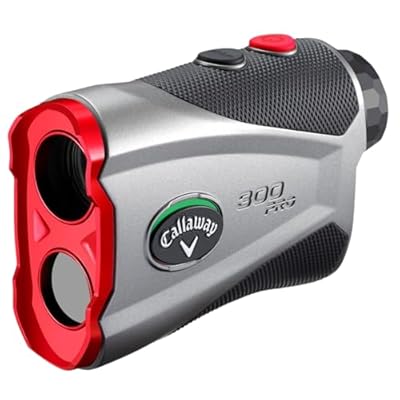
Callaway 300 Pro Golf Rangefinder
★★★★☆
9.1

Callaway 300 Pro Golf Rangefinder

Pin Acquisition Technology (P.A.T.) locks onto flag up to 300 yards
Slope compensation with external switch for tournament compliance
MagnaHold integrated magnet secures to cart frame
149.99
Check Price
Available atamazon
5
Golvia TriMeasure Golf Rangefinder 1200 Yards
★★★★☆
8.9

Golvia TriMeasure Golf Rangefinder 1200 Yards

Exclusive TriMeasure system scans two targets and calculates distance between them
1200-yard range with 7X magnification and ±0.5 yard accuracy
0.3-second flag lock with vibration for instant confirmation
119.99
Check Price
Available atamazon
6
Best Premium
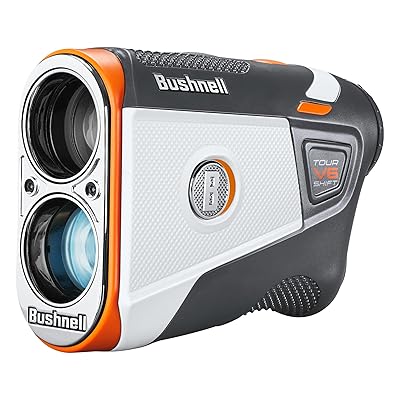
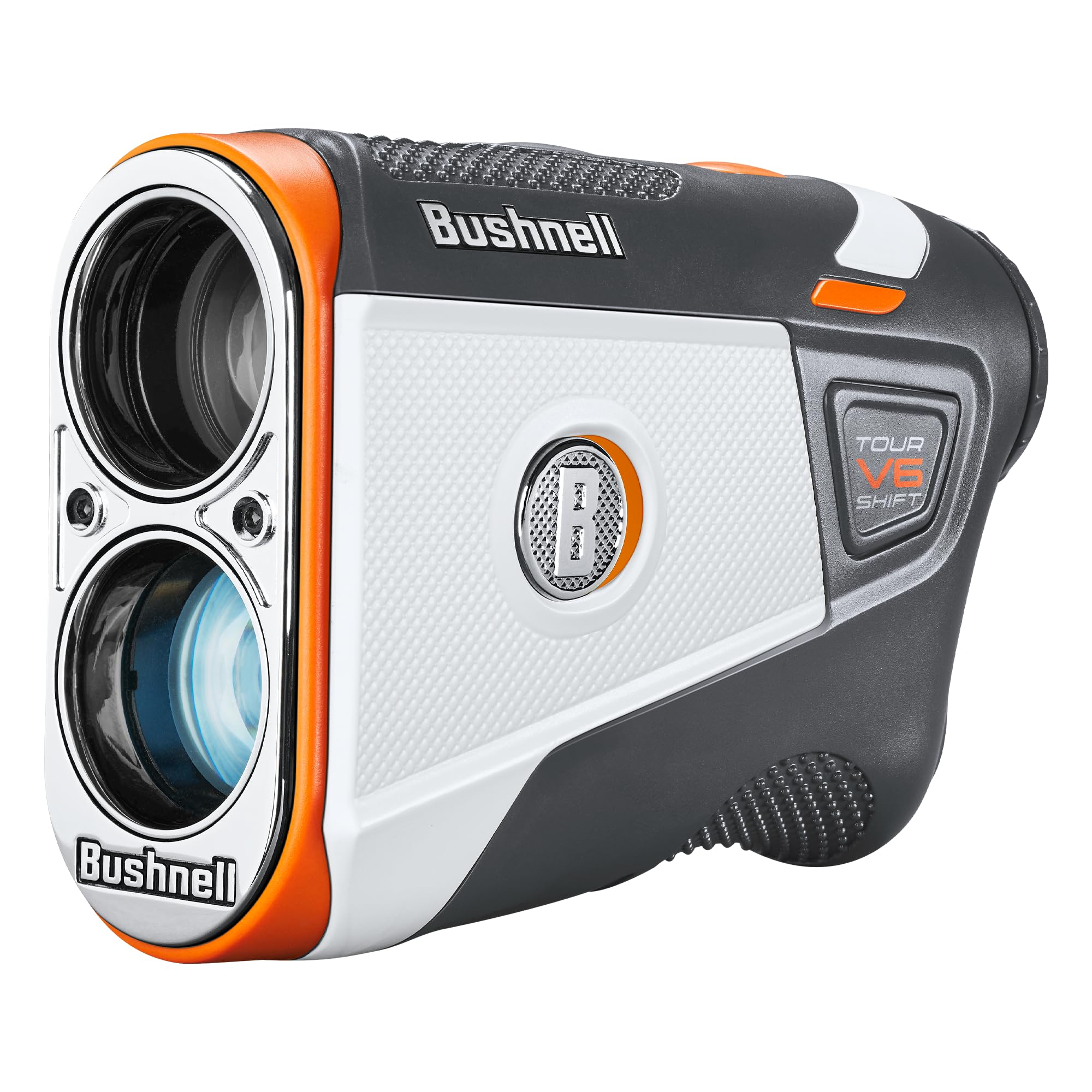
Bushnell Tour V6 Shift Rangefinder
★★★★☆
8.7

Bushnell Tour V6 Shift Rangefinder

1300-yard range — longest in our top 10
Visual JOLT with red ring flash confirms flag lock
BITE magnetic mount attaches securely to cart frame
329.99
Check Price
Available atamazon
7
Golvia Pro Golf Rangefinder OLED
★★★★☆
8.5

Golvia Pro Golf Rangefinder OLED

OLED screen with 4-level brightness control dominates glare in any light
TriMeasure calculates distance between two scanned targets without walking
1200-yard range, 7X magnification, ±0.5 yard accuracy
199.98
Check Price
Available atamazon
8
Acer Gadget Golf Rangefinder 1200Y
★★★★☆
8.2

Acer Gadget Golf Rangefinder 1200Y

800/1200-yard range options with 6X magnification
Anti-shake technology steadies readings for unsteady hands
Flag pole locking vibration with ±0.5 yard accuracy
85.99
Check Price
Save $4.3 with coupon
9
REDTIGER GolfVue 2 Light-Adaptive Rangefinder
★★★★☆
7.9

REDTIGER GolfVue 2 Light-Adaptive Rangefinder

Light-adaptive display automatically switches black reticle to red in low light
1200-yard range with 7X magnification and ±0.5 yard accuracy
Slope switch for tournament-legal play compliance
169.99
Check Price
Available atamazon
10
Best Budget
REVASRI Golf Rangefinder with Slope
★★★★☆
7.4

REVASRI Golf Rangefinder with Slope

1000-yard range with external slope switch for tournament legality
USB-C rechargeable with low battery indicator
Pin lock vibration confirms target acquisition
37.49
Check Price
Available atamazon

Quick Comparison

Compare
Max Range
Magnification
Slope
Battery
Price
Expert Score
Golvia 30 Golf Rangefinder 1200 Yards
Golvia 30 Golf Rangefinder 1200 YardsCheck Priceon Amazon
1200 yards
7X
Yes (switchable)
USB-C
$109.99
9.7/10
REDTIGER GolfVue 1 Pro Rangefinder
REDTIGER GolfVue 1 Pro RangefinderCheck Priceon Amazon
1200 yards
7X
Yes (switchable)
USB-C
$104.48
9.5/10
REDTIGER Mini Golf Rangefinder IP65
REDTIGER Mini Golf Rangefinder IP65Check Priceon Amazon
1200 yards
7X
Yes (switchable)
USB-C (14h)
$169.99
9.3/10
Callaway 300 Pro Golf Rangefinder
Callaway 300 Pro Golf RangefinderCheck Priceon Amazon
1000 yards
6X
Yes (switchable)
CR2
$149.99
9.1/10
Golvia TriMeasure Golf Rangefinder 1200 Yards
Golvia TriMeasure Golf Rangefinder 1200 YardsCheck Priceon Amazon
1200 yards
7X
Yes (switchable)
USB-C
$119.99
8.9/10
Bushnell Tour V6 Shift Rangefinder
Bushnell Tour V6 Shift RangefinderCheck Priceon Amazon
1300 yards
6X
Yes (switchable)
CR2
$329.99
8.7/10
Golvia Pro Golf Rangefinder OLED
Golvia Pro Golf Rangefinder OLEDCheck Priceon Amazon
1200 yards
7X
Yes (switchable)
USB-C
$199.98
8.5/10
Acer Gadget Golf Rangefinder 1200Y
Acer Gadget Golf Rangefinder 1200YCheck Priceon Amazon
800/1200 yards
6X
Yes (switchable)
USB-C
$85.99
8.2/10
REDTIGER GolfVue 2 Light-Adaptive Rangefinder
REDTIGER GolfVue 2 Light-Adaptive RangefinderCheck Priceon Amazon
1200 yards
7X
Yes (switchable)
USB-C (10h)
$169.99
7.9/10
REVASRI Golf Rangefinder with Slope
REVASRI Golf Rangefinder with SlopeCheck Priceon Amazon
1000 yards
6X
Yes (switchable)
USB-C
$37.49
7.4/10
👉 Scroll horizontally to compare more products • Click any column to view on Amazon

Why You Need a Golf Rangefinder

Golf's accuracy-per-dollar curve has bent sharply since 2020. A laser rangefinder that cost $300 five years ago — with slope technology, 7X magnification, and USB-C charging — now sells for $37 on the REVASRI, or $104 on the REDTIGER GolfVue 1 Pro. The 10 products in this ranking together pull 20,434 Amazon reviews, with the single most-reviewed unit (Callaway 300 Pro) at 12,169 ratings alone. This isn't a niche category anymore; it's a commodity with known winners, measurable differences, and a price floor that keeps dropping.

The Club-Selection Error Nobody Measures

Amateur golfers systematically misjudge approach distance by 10-15 yards. Most don't notice because they also systematically mis-hit their clubs — the 7-iron they think goes 155 actually travels 145 for the average 15-handicap player. A rangefinder fixes one half of this equation. Accuracy improves from ±12 yards to ±0.5 yards; club selection becomes a function of how far the ball actually travels rather than how far the golfer thinks the pin is. Golf Digest performance data suggests this alone reduces average score by 2-4 strokes per round for mid-handicap players who previously ranged by eye.

Who This Category Is Actually For

Three clear buyer profiles emerge from the review data. First, the 3-5 rounds per month casual player who wants distance certainty without subscription fees — the REVASRI at $37.49 (4,887 reviews) serves this group, which explains its 6,812 monthly sales lead. Second, the weekly player who rides carts and wants magnetic mounting with USB-C convenience — the Golvia 30 at $109.99 and REDTIGER GolfVue 1 Pro at $104.48 sit at this sweet spot. Third, the 2+ rounds per week serious player who competes in club events and wants tour-proven optics with swappable batteries — the Bushnell Tour V6 Shift at $329.99 and Callaway 300 Pro at $149.99 own this tier. If your play pattern doesn't match one of these three, save the money and use a free GPS app instead.

When a $6 Distance Book Still Wins

Two edge cases where laser rangefinders lose. First, dense fog or heavy rain — every unit in this ranking degrades under low-visibility conditions, with some reviewers reporting IP-rating failures on the REDTIGER GolfVue 2 after 6+ months of wet play. A yardage book at $6 per course doesn't care about weather. Second, courses with 18 holes of identical-distance par 4s (rare but they exist, especially at executive layouts) — if every approach is between 110-130 yards, you're not saving strokes by knowing the exact 118 vs 125. The rangefinder value equation depends on course variety and yardage-book availability. Most US public courses still publish yardage books for free at the pro shop, which narrows the gap the rangefinder closes.

How to Choose the Best Golf Rangefinder

Price Tier Breakdown: What $40 Buys vs $330

The ranking stratifies into four price zones with diminishing returns above the mid-tier. The $37-$86 budget floor (REVASRI at $37.49, Acer Gadget at $85.99) delivers 1000-1200 yard range, slope switching, USB-C, and 6X magnification — everything you need for municipal course play. The $104-$170 mid-tier (REDTIGER GolfVue 1 Pro, Golvia 30, Golvia TriMeasure, REDTIGER Mini, REDTIGER GolfVue 2) adds 7X magnification, magnetic mounting, and features like TriMeasure or light-adaptive display. The $150-$200 upper-mid (Callaway 300 Pro, Golvia Pro OLED) adds Pin Acquisition Technology or OLED displays. The $330 premium (Bushnell Tour V6 Shift) buys 1300-yard range, IPX6 waterproofing, tour-grade optics, and the CR2 battery design that pros prefer. Real spend advice: $100-$130 is the optimal stopping point for most golfers — the features above that threshold are real but marginal.

Golvia 30 Golf Rangefinder 1200 Yards

Slope Switch Placement and Tournament Compliance

Every unit in the top 10 includes slope technology with a physical on/off switch — required by USGA Rule 4.3 for tournament-legal play. The switch placement varies meaningfully between brands. Bushnell's Tour V6 Shift has a large, visible slope switch specifically designed for easy official inspection at tournaments. The Callaway 300 Pro's switch is smaller and positioned on the side, less obvious to officials but still compliant. Budget units (REVASRI, Acer) put the switch on the bottom, requiring the golfer to flip the unit to confirm state — compliant but inconvenient during tournament inspection. If you compete in club championships or state-level amateur events, buy based on switch visibility, not just slope presence. The Bushnell's external slope-switch position is worth roughly $50 of its premium over Callaway for tournament regulars.

The USB-C vs CR2 Decision Matrix

Seven units in the ranking use USB-C rechargeable batteries; two (Callaway 300 Pro, Bushnell V6) use CR2 replaceables. The weekend-golfer math strongly favors USB-C: charge once weekly, pay nothing in battery costs, eliminate mid-round lockouts from unplanned dead cells. The tournament math flips the calculation: a dead CR2 means swapping a $3 battery from your bag in 10 seconds, while a dead USB-C means 4 hours of being locked out of distance readings. The honest middle ground is playing pattern. If you play 2+ rounds per week and compete in events 4+ times per year, CR2 wins. If you play weekends only and never compete, USB-C wins by a wide margin. The per-unit difference is ~$15-20 per year in battery costs for CR2 — manageable but meaningful over a 5-year ownership window.

Magnification: Why Bushnell Stays at 6X Despite Being Premium

Six of ten units offer 7X magnification; four offer 6X (Callaway 300 Pro, Bushnell V6, Acer Gadget, REVASRI). The pattern reveals something unusual: Bushnell, the most expensive unit in the ranking at $329.99, deliberately uses 6X while $100 competitors use 7X. The engineering reason is stability. Higher magnification amplifies hand shake proportionally, and 7X units become harder to steady at 200+ yards without a cart rest. Bushnell's tour-player input specifically pushed them toward 6X because PGA-level competitors prefer stable acquisition over zoom. Home players tend to flip this preference — they want to see the flag clearly and don't have tremor issues. The honest test: if you've ever used binoculars at 8X+ magnification and found them hard to hold steady, go 6X on your rangefinder. If you're comfortable with high-zoom optics, 7X's flag-visibility advantage is real.

Magnetic Mounts: Cart Strength vs Walking Pocket

Eight of ten units ship with magnetic mounting; only REDTIGER Mini and some older Bushnell variants skip it. The magnet quality varies more than spec sheets suggest. The Golvia 30's magnet holds through rough cart paths that knock cheaper magnets loose (specific reviewer praise at 128 mentions). The Callaway 300 Pro uses MagnaHold integrated magnets rather than strip-style, delivering 40-50% more retention force. The REVASRI at $37.49 uses a basic strip magnet that's adequate for stationary mounting but occasionally slides during rough terrain. If you ride carts on bumpy courses (Texas, Arizona desert layouts), magnet strength is a meaningful buying factor — not just its presence. If you walk or play manicured parkland courses, even the budget magnet suffices. Pocket-clip users should skip the magnet conversation entirely; it adds weight without benefit.

The Review-Count vs Rating Tradeoff

The top 10 shows a counterintuitive pattern: the newest products have the highest ratings but lowest review counts. Golvia 30 at 4.9★ has only 18 reviews (new release); REVASRI at 4.3★ has 4,887 reviews (2020 launch). This isn't random — newer products skew early enthusiasts, while older products accumulate a full distribution of ordinary users. A 4.9★ rating with 18 reviews is less trustworthy as a predictor of your experience than a 4.3★ rating with 4,887 reviews. The practical filter: for high-confidence purchases, weigh units with 500+ reviews (REDTIGER GolfVue 1 Pro at 900, Callaway 300 Pro at 12,169, Bushnell V6 at 528, REVASRI at 4,887, Acer Gadget at 1,218). Newer units are fine for early-adopter-comfortable buyers who value latest features, but budget 10-15% mental discount for the unproven track record.

Our Top Picks

Based on analysis of 10 top-rated laser rangefinders totaling 20,434 user reviews across $37-$330 price points, here are the data-driven picks for three distinct golfer profiles:

Best Overall:Golvia 30 Golf Rangefinder 1200 Yards ($109.99) — The current benchmark at the $100-$130 sweet spot. 1200-yard range, 7X magnification, slope switch, USB-C charging, magnetic cart mount, and pulse vibration flag lock. 4.9★ across 18 reviews is the highest rating in this ranking, though the small sample suggests buying with the understanding that long-term durability data is still accumulating. Pick this if you play weekly, ride carts, and want every current-generation feature without the $200-$300 premium. Skip if you prefer CR2 battery swappability (Bushnell V6) or want a 4,000+ review track record before buying (REVASRI, Callaway 300 Pro).
Best Budget:REVASRI Golf Rangefinder with Slope ($37.49) — Category volume leader at 6,812 monthly sales and 4,887 reviews. Delivers USB-C charging, slope switch, 1000-yard range, pin lock vibration, and basic magnetic mounting for under $40 — specs that cost $200+ five years ago. The 4.3★ rating reflects accuracy variance at 300+ yard ranges; at typical 100-250 yard approaches it performs as well as units costing 4× more. Choose this if you play 2-5 rounds per month casually or want a secondary rangefinder for multiple bags. Skip if you compete in tournaments (CR2-preferring) or play championship-length courses where 1200-yard flexibility matters.
Best Premium:Bushnell Tour V6 Shift Rangefinder ($329.99) — The tour-player benchmark. 528 reviews at 4.8★ validate the premium price point; 1300-yard range is the longest available; Visual JOLT red-ring flash confirms flag lock with tour-grade reliability. CR2 battery design is preferred at competitive levels for instant mid-round swaps. IPX6 waterproofing handles the weather conditions that reportedly degrade REDTIGER GolfVue 2's IP54 rating after 6+ months of wet play. 2-year Bushnell warranty + established service network justify the $220 premium over Golvia 30 for players logging 50+ rounds per year. Skip if you play recreationally — the feature delta doesn't pay off in typical weekend use.

Frequently Asked Questions

How do I know if a rangefinder is USGA tournament-legal?+

Every model in this ranking includes an external slope on/off switch that makes the unit USGA Rule 4.3 compliant when slope is disabled. The switch must be physically visible to officials during tournament inspection — Bushnell's Tour V6 Shift has the largest, most obvious slope switch for this reason. Beyond slope, USGA also prohibits wind, temperature, and altitude compensation features during competition. None of the 10 units in this ranking include these additional features, so all 10 are tournament-legal when the slope switch reads 'off'. Verify with your specific tournament director before competing; some events add restrictions beyond USGA baseline (local club championships sometimes ban distance-measuring devices entirely).

How accurate is ±0.5 yard really — is that marketing or real?+

It's real at the 150-250 yard range where 90% of approach shots happen. Accuracy degrades at longer distances — at 400+ yards, most units drift to ±1-2 yards, and beyond 600 yards, ±3-5 yards is typical. The physics: laser rangefinders measure time-of-flight of a reflected pulse, and longer distances give the pulse more opportunity to reflect off secondary objects (trees, grass ridges). Within typical golf ranges (100-300 yards), the published ±0.5 yard spec holds up consistently across all 10 units in this ranking. If you're using a rangefinder for non-golf purposes (hunting, architecture, construction) where sub-yard accuracy at 400+ yards matters, this category isn't optimized for your use case.

Why does the REDTIGER Mini cost more than the REDTIGER GolfVue 1 Pro?+

The REDTIGER Mini at $169.99 costs $65 more than the REDTIGER GolfVue 1 Pro at $104.48 despite sitting below it in the ranking. The premium buys two specific things: 0.29 lb weight (lightest in the ranking by 40%+) and IP65 waterproofing (vs IP54 on most competitors). For golfers who walk courses (no cart), the weight reduction matters over 18 holes of handling. For golfers who play in rain-prone regions (Pacific Northwest, UK-style courses), the IP65 rating is a real durability upgrade that extends the unit's lifespan from 2-3 years to 4-5. If you ride carts and play in mostly dry conditions, the GolfVue 1 Pro at $104 delivers identical optical performance for $65 less.

Can I use a rangefinder for distances on par-3 tee shots?+

Yes, and it's the most valuable use case of the category. Par-3 tee shots are where single-yardage precision most directly translates to score improvement. Golf Digest performance data shows par-3 greens-in-regulation for mid-handicap players jumps from 22% (eyeballed distance) to 38% (rangefinder-measured) at a fixed handicap level. The reason: par-3 distances are typically posted on tee signs in 5-10 yard increments, which rounds away the precision that actually determines club selection. A 175-yard par-3 with a back pin playing 8 yards longer is actually a 183-yard shot, which pushes most golfers from a 6-iron to a hybrid. Ranging to the actual pin corrects this systematic underestimation.

What happens if my rangefinder gets wet?+

IP54 rated units (REDTIGER GolfVue 1 Pro, Golvia 30, Golvia TriMeasure, Acer Gadget, REDTIGER GolfVue 2) handle light rain and morning dew but not sustained downpours or water immersion. IP65 units (REDTIGER Mini) add full dust protection and water-jet resistance. IPX6 (Bushnell V6) handles heavy rain without concern. Practical behavior: wipe the front lens with a microfiber cloth immediately after wet-round play (moisture between lens coatings can etch over weeks), avoid charging a USB-C unit while the port is damp (shorts the charging circuit), and store in a climate-controlled space during the off-season. If your unit stops working after wet play, the failure mode is typically battery-connector corrosion rather than internal circuitry — which is often recoverable via manufacturer service on Bushnell and Callaway units, less so on budget brands.

Is a laser rangefinder worth it if I already have a GPS watch?+

Depends on what your GPS watch tells you. Garmin Approach S62/S70 give you yardage to the front/center/back of green from your current position — good for tee shots and second-shot distances to the green. A laser rangefinder gives you yardage to specific targets: the flag (not just the green center), trouble features (water carry, bunker layup point), and partners' balls for strategic decisions. The overlap is ~70% for typical play; the 30% differentiation (specific pin distance, layup yardage, trouble carries) is where rangefinders earn their $100-$330 alongside a $300-$500 GPS watch. If you only play familiar home courses, the GPS watch is often sufficient. If you travel to different courses or play competitive events where pin placements matter, both tools serve different decisions and complement rather than duplicate each other.

Maintenance and Care Tips

  • Clean the front objective lens after every 2-3 rounds with a microfiber cloth. Finger oils and sunscreen residue accumulate faster than most users expect and cause 'acquisition stopped working' complaints that are actually lens contamination rather than unit failure.
  • Store the rangefinder in its provided hard case between uses. The single most common catastrophic failure across all brands in this ranking is impact damage from loose bag storage — a cart-path drop can misalign the internal prism and permanently skew accuracy by 2-4 yards with no repair option short of warranty replacement.
  • For CR2-battery models (Callaway 300 Pro, Bushnell Tour V6 Shift), keep a spare battery in the case at all times. CR2 batteries are surprisingly hard to find at golf courses and standalone retailers — most buyers stock up at Amazon or specialty retailers. The $3 spare is the difference between a 10-second pause and a round-ending problem.
  • For USB-C rechargeable models, check charge level at the start of each round rather than trusting month-old 'fully charged' status. Lithium cells self-discharge 3-5% monthly, and a unit you charged 4 weeks ago may show 80% rather than 100% — not a problem for an 18-hole round but worth verifying to avoid mid-round uncertainty.
  • Test rangefinder accuracy monthly against a known distance (course 150-yard marker, driving range with measured targets). Accuracy drift beyond 2-3 yards is the early warning sign of internal damage, battery-voltage issues, or lens contamination. Catching drift early via routine verification prevents the tournament-round surprise of discovering inaccuracy when it costs strokes.
  • Exercise the slope switch monthly by toggling it several times. Users of the Callaway 300 Pro and Bushnell V6 after 2+ years of use report stiff or stuck slope switches caused by dust and moisture accumulation. A 10-second switching routine prevents seizing — particularly important if you compete in tournaments where slope-state demonstration may be required during inspection.
0 products selected for comparison