1
AKASO Brave 4 4K Action Camera
★★★★★
9.74
1,250 reviews

AKASO Brave 4 4K Action Camera

4K at 30fps with 20MP still photos via 170° wide-angle lens
131ft (40m) waterproof housing included — deepest rating in the sub-$100 tier
Built-in EIS (Electronic Image Stabilization) — feature that used to cost $300+ in 2019
Read full review →
996+ bought in past month
99.99
Check Price
Available atamazon
2
DJI Osmo Action 4 Essential Combo
★★★★★
9.63
7,838 reviews

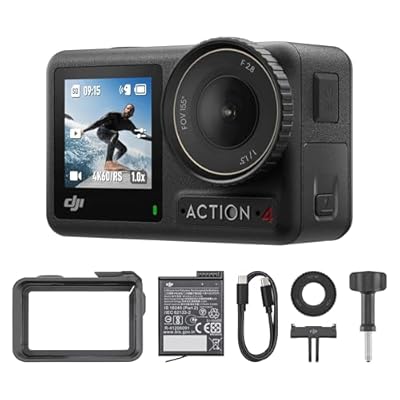
DJI Osmo Action 4 Essential Combo

4K at 120fps with 1/1.3-inch sensor and 2.4μm pixel size for low-light performance
10-bit color with D-Log M profile for professional grading workflows
150-minute runtime per battery; operates down to -20°C (-4°F)
229
Check Price
Available atamazon
3
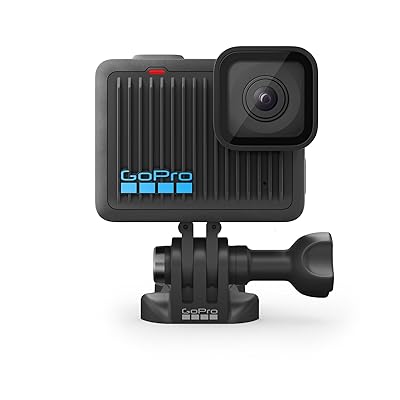
GoPro Hero Compact 4K Action Camera
★★★★★
9.63
2,164 reviews

GoPro Hero Compact 4K Action Camera

4K Ultra HD video with 12MP photo in GoPro's smallest waterproof body (86g/3oz)
Touch rear screen with simplified 2-button capture (no menu navigation needed)
Waterproof to 16ft (5m) without housing
199
Check Price
Available atamazon
4
DJI Osmo Action 5 Pro Essential Combo
★★★★★
9.54
1,277 reviews

DJI Osmo Action 5 Pro Essential Combo

1/1.3" sensor with 2.4μm pixels and 13.5-stop dynamic range
4K/120fps with AI subject tracking that keeps moving subjects centered in 16:9 or 9:16
Dual OLED touchscreens (front + rear) with ultra-bright visibility
309
Check Price
Available atamazon
5
DJI Osmo Nano 4K Vlogging Camera
★★★★☆
9.37
1,326 reviews

DJI Osmo Nano 4K Vlogging Camera

4K/60fps in a 143° wide FOV from a 1/1.3-inch sensor
200-minute continuous recording runtime (longest in compact POV segment)
Magnetic mount system for hands-free POV capture on cap, clothing, or gear
379.99
Check Price
Available atamazon
6
GoPro HERO13 Black 5.3K Action Camera
★★★★☆
9.29
903 reviews

GoPro HERO13 Black 5.3K Action Camera

5.3K at 60fps — 91% more resolution than 4K, 665% more than 1080p
27MP photos plus 24.7MP extracted from 5.3K video via GoPro Quik
HB-Series modular lens compatibility (Ultra Wide, Macro, ND Filters, Anamorphic)
379
Check Price
Available atamazon
7
Insta360 X5 Essentials 8K 360° Camera
★★★★☆
8.94
799 reviews

Insta360 X5 Essentials 8K 360° Camera

8K at 30fps 360° video via dual 1/1.28-inch sensors
Invisible Selfie Stick effect — the stick disappears from 360° footage automatically
User-replaceable lens design — replace scratched lenses for $30 instead of replacing the camera
659.99
Check Price
Available atamazon
8
DJI Osmo Action 6 Enhanced Combo
★★★★☆
8.85
471 reviews

DJI Osmo Action 6 Enhanced Combo

1/1.1" square sensor — largest in a non-360 action cam, rivaling 1-inch compact cameras
Variable physical aperture (f/2.0 to f/4.0) — first action cam with adjustable aperture
8K video capability (photo/timelapse mode); sustained video caps at 4K/120
496
Check Price
Available atamazon
9
Insta360 GO Ultra 4K Wearable POV Camera
★★★★☆
8.84
648 reviews

Insta360 GO Ultra 4K Wearable POV Camera

Just 53g (1.9 oz) for the standalone camera — lightest 4K unit in the top 100
4K/60fps video with 4K Active HDR and 1/1.28-inch sensor
70 min standalone runtime; 200 min total with the Action Pod dock
449.99
Check Price
Available atamazon
10
Insta360 Ace Pro 2 Dual Battery Bundle
★★★★☆
8.73
73 reviews

Insta360 Ace Pro 2 Dual Battery Bundle

8K/30fps via 1/1.3" sensor with 13.5 stops of dynamic range
Leica Summarit co-engineered lens — first action camera with branded Leica optics
Dual AI chip: dedicated Pro Imaging Chip + 5nm AI Chip for 100% more compute than Ace Pro
389.99
Check Price
Available atamazon

Quick Comparison

Compare
Resolution
Sensor
Battery
Type
Price
Expert Score
AKASO Brave 4 4K Action Camera
AKASO Brave 4 4K Action CameraCheck Priceon Amazon
4K/30fps, 20MP
CMOS
~90 min
Standard Action Camera
$99.99
9.7/10
DJI Osmo Action 4 Essential Combo
DJI Osmo Action 4 Essential ComboCheck Priceon Amazon
4K/120fps
1/1.3 inch
150 min
Standard Action Camera
$229.00
9.6/10
GoPro Hero Compact 4K Action Camera
GoPro Hero Compact 4K Action CameraCheck Priceon Amazon
4K UHD, 12MP
CMOS
~50-60 min
Standard Action Camera
$199.00
9.6/10
DJI Osmo Action 5 Pro Essential Combo
DJI Osmo Action 5 Pro Essential ComboCheck Priceon Amazon
4K/120fps
1/1.3 inch
240 min
Standard Action Camera
$309.00
9.5/10
DJI Osmo Nano 4K Vlogging Camera
DJI Osmo Nano 4K Vlogging CameraCheck Priceon Amazon
4K/60fps
1/1.3 inch
200 min
Compact POV Camera
$379.99
9.4/10
GoPro HERO13 Black 5.3K Action Camera
GoPro HERO13 Black 5.3K Action CameraCheck Priceon Amazon
5.3K/60fps, 27MP
5.3K CMOS
~70 min
Standard Action Camera
$379.00
9.3/10
Insta360 X5 Essentials 8K 360° Camera
Insta360 X5 Essentials 8K 360° CameraCheck Priceon Amazon
8K/30fps 360°
Dual 1/1.28 inch
208 min
360 Camera
$659.99
8.9/10
DJI Osmo Action 6 Enhanced Combo
DJI Osmo Action 6 Enhanced ComboCheck Priceon Amazon
4K/120fps, 8K photo
1/1.1 inch square
240 min (2 batt)
Standard Action Camera
$496.00
8.9/10
Insta360 GO Ultra 4K Wearable POV Camera
Insta360 GO Ultra 4K Wearable POV CameraCheck Priceon Amazon
4K/60fps
1/1.28 inch
70/200 min
Compact POV Camera
$449.99
8.8/10
Insta360 Ace Pro 2 Dual Battery Bundle
Insta360 Ace Pro 2 Dual Battery BundleCheck Priceon Amazon
8K/30fps
1/1.3 inch
~120 min
Standard Action Camera
$389.99
8.7/10
👉 Scroll horizontally to compare more products • Click any column to view on Amazon

Why You Need an Action Camera

Smartphones kill camera categories — except one. Action cameras survived the iPhone era because they do three things no phone can: go 18+ meters underwater without a case, survive a mountain-bike crash, and mount to a helmet without you worrying about a $1,200 device. The top 100 action cameras moved $17.8M in a single month across DJI, Insta360, and GoPro's three-way brand war — proof that when people want to capture the parts of life their phone would break in, they still buy a dedicated camera.

The Three-Brand Oligopoly That Runs This Category

DJI (23% of units), Insta360 (22%), and GoPro (17%) together control 62% of action camera sales — a structure that hasn't existed in consumer electronics since the Canon/Nikon/Sony DSLR era. Each brand owns a different angle: DJI leads on sensor size and price-per-spec (Osmo Action 4 at $229 delivers 4K/120 and 10-bit color that cost $600 two years ago). Insta360 owns the 360° and POV niches (X5 at $660 is the only 8K spherical option, GO Ultra at 53g is the lightest 4K camera ever made). GoPro holds legacy mount ecosystem lock-in — every third-party rig in the last decade is built around GoPro's 1/4"-20 fin mount, which is why HERO13 Black still sells 3,707 units monthly at a $80 premium over better-specced DJI equivalents.

Three User Types, Three Different Cameras

If you ski, surf, or bike weekly, the $229-309 tier (DJI Action 4/5 Pro) is correct — 4K/120fps matters because slow-motion replays are the shareable moment, and 150-240 minute battery life handles a full day. If you vlog or film yourself hands-free, the 50-60g tier (Insta360 GO Ultra at 53g, DJI Osmo Nano at 52g) is the entire point — these camera-on-a-necklace designs are invisible in footage and weigh less than a phone case. If you film once a year on vacation or at birthdays, $99 AKASO Brave 4 delivers 4K/30 and waterproof housing at one-third the cost of DJI's base tier. The mistake most buyers make is overpaying for GoPro's brand when their use case is vacation photography, or underpaying for a $99 unit when they actually need 4K/120 slow-motion.

When You Genuinely Don't Need One

Modern smartphones now shoot 4K/60 with excellent stabilization in a body that weighs 180-220g. If your filming happens in dry, well-lit, non-adventurous conditions, an iPhone 17 Pro shoots better 4K than any sub-$200 action camera and half the $300-400 tier. The honest dividing line: if you've thought 'I'd film this but I don't want to risk my phone' in the last 12 months, buy an action camera. If you haven't, you don't have an action camera use case — you have an iPhone use case, and the $400 saved covers a couple of good accessory cases instead.

How to Choose the Best Action Camera

Sensor Size: The Spec That Dictates Everything Else

Sensor size determines low-light performance, dynamic range, and photo quality — and the 2026 action camera market has stratified into four distinct tiers. The budget floor ($99 AKASO Brave 4) uses standard CMOS sensors with undisclosed size, delivering usable 4K in good light but noisy footage indoors or at dusk. The DJI mainstream tier ($229-309, Action 4 Essential and Action 5 Pro) uses 1/1.3" sensors with 2.4μm pixels — large enough for 13.5 stops of dynamic range and professional-grade low-light capture. The Insta360 GO Ultra ups this to 1/1.28" in a 53g body, an engineering feat. At the top, DJI Osmo Action 6's 1/1.1" square sensor rivals 1-inch compact cameras like the Sony RX100 in image quality — but costs $496. For 90% of buyers, the 1/1.3" tier is the correct stopping point — the jump from 1/1.3" to 1/1.1" is noticeable in RAW stills but imperceptible in Instagram Reels.

AKASO Brave 4 4K Action Camera

4K vs 5.3K vs 8K: What Actually Changes in Practice

The top 10 cameras split into three resolution tiers: 4K (7 of 10), 5.3K (GoPro HERO13 only), and 8K (Insta360 X5, DJI Action 6 photo mode, Insta360 Ace Pro 2). Here's the practical reality: 4K is sufficient for YouTube, Instagram, and TikTok — every platform downscales to 1080p anyway. 5.3K matters if you reframe footage in post (shoot wide, crop to 4K with room to stabilize or recompose). 8K only matters for professional production workflows or 360° cameras where the 8K gets reframed into a traditional 4K output. Paying $380 for GoPro HERO13's 5.3K instead of $229 for DJI Action 4's 4K only makes sense if you edit every clip and actually reframe. Paying $660 for Insta360 X5's 8K 360° makes sense if you shoot 360° content — otherwise it's $400 of resolution you won't see in the final delivery.

Battery Life: Where Marketing Specs Break Down

Advertised battery life is measured under lab conditions: 1080p30, screen off, no Wi-Fi, room temperature. Real-world 4K shooting with the screen on cuts this by 50-65%. DJI Action 5 Pro's '4-hour' runtime becomes 90-120 minutes in 4K60 with active shooting; GoPro HERO13's undisclosed runtime drops to ~70 minutes at 5.3K60. The Insta360 X5's 208-minute spec stays closer to reality because it's measured under 360° capture conditions. For a full day of skiing (6-7 hours of on-mountain time), you need two batteries minimum on any camera except the DJI Action 6 Enhanced (comes with 2 batteries, ~240 min combined) or Insta360 X5 (single 208-min battery covers most days). If you're buying a compact POV cam for hands-free capture, the Insta360 GO Ultra's Action Pod charging dock (tripling runtime from 70 to 200 min) makes it the practical winner over DJI Osmo Nano's built-in 200-min battery — because you can charge the GO Ultra's body while shooting with a spare.

360° Cameras: Worth the Complexity?

Only the Insta360 X5 represents the 360° category in the top 10. Here's the honest pitch: 360° cameras let you not think about framing — record everything, pick the best angle in post. The Invisible Selfie Stick effect (stick disappears from 360° footage) is genuinely magical for travel content. The catch is workflow: 360° footage requires reframing in Insta360 Studio (the app is excellent, but it's another editing step), and file sizes are 2-3× larger than 4K. For YouTube creators who already edit, 360° adds post-production time but unlocks shots that are impossible any other way. For casual users who shoot to share immediately, 360° is friction — a traditional camera with a good wide-angle lens delivers 90% of the capture value with zero editing overhead. If you're unsure, buy a non-360° first ($229 DJI Action 4 Essential); 360° is a second camera you buy after mastering traditional action cam workflow.

The Compact POV Category: Insta360 GO vs DJI Osmo Nano

The sub-60g 'mount-anywhere' category barely existed before 2024. Now it's a two-horse race: DJI Osmo Nano (52g, $379.99, 4K/60, 143° FOV, 200-min battery) vs Insta360 GO Ultra (53g, $449.99, 4K/60, 156° FOV, 70-min standalone + 200-min with Action Pod). DJI wins on pure runtime and $70 lower price. Insta360 wins on FOV (156° vs 143° — noticeable when shooting arms-out or helmet-mounted) and on the Action Pod workflow that also functions as a charging case. For cycling, pet POV, or running, DJI Osmo Nano is the better default — simpler workflow, longer standalone battery. For content creators who want the flexibility of popping off the camera body for an ultra-compact shot then docking it to the Action Pod for framing and longer runtime, Insta360 GO Ultra is the right $70 premium.

Our Top Picks

Based on analysis of 100 top-selling action cameras representing $17.8M in monthly sales across 62,000 units, here are the data-driven picks for different user profiles:

Best Overall:DJI Osmo Action 4 Essential Combo ($229) — 7,838 reviews at 4.6★ and the best price-per-spec in the premium action camera tier. 4K/120fps with a 1/1.3" sensor and 10-bit D-Log M color matches what cost $600 in 2023. 150-minute battery works in -20°C cold, 18m waterproof without housing, 145g body. The $80-270 premium for Action 5 Pro, 6, or HERO13 Black buys marginal upgrades (subject tracking, variable aperture, 5.3K resolution) that most users won't use in daily capture. Buy this unless you specifically need 360°, ultra-compact POV, or GoPro's HB-Series modular lens ecosystem.
Best Budget:AKASO Brave 4 ($99.99) — The only sub-$100 action camera in the top 10 with 4K/30, EIS stabilization, and 131ft waterproof housing included. 1,250 reviews at 4.5★ over 2+ years proves mid-term durability. 64GB U3 microSD card + helmet accessory kit bundled at no extra cost. Trade-offs are meaningful: no 4K/120 slow-motion, no 10-bit color, no AI-assisted editing app. Right choice for birthdays/vacation shooting, beginners learning action camera workflows, or as a second 'throwaway' rig for risky mounts (helmet front, mountain bike handlebar) where you'd hate to crash a $380 GoPro.
Best Premium:Insta360 X5 Essentials Bundle ($659.99) — The only 360° camera in the top 10 and the highest-rated action camera in the entire top 100 at 4.8★. 8K dual-sensor 360° capture lets you reframe in post — record everything, pick the shot later. Replaceable lenses ($30 each) end the 'dropped my expensive camera' repair cost problem that plagues GoPro and DJI. 208-minute battery triples GoPro HERO13 runtime. This is correct only if you genuinely edit 360° footage in Insta360 Studio — it adds 10-15 minutes of reframing per edit. For users who don't edit, the $229 DJI Action 4 Essential delivers more finished content with less friction.

Frequently Asked Questions

GoPro, DJI, or Insta360 — which brand should I actually buy?+

Pick based on what you already own, not what's best in isolation. DJI if you own a DJI drone or DJI Mic 2 — the Osmo Action connects wirelessly to DJI Mic transmitters without a receiver and integrates with DJI Mimo for a unified workflow. GoPro if you own 3+ GoPro accessories from prior generations — the 1/4"-20 mount ecosystem means everything you bought for HERO7/8/9/10/11/12 still works with HERO13. Insta360 if you specifically want 360° capture or the sub-60g POV form factor — no other brand has a legitimate answer in these niches. For new buyers without an existing ecosystem, DJI Action 4 Essential at $229 is the correct default — best price-per-spec, longest battery, largest review sample.

Is 4K actually enough or do I need 5.3K/8K?+

For YouTube, Instagram, TikTok, or any social-first workflow: 4K is enough. Every platform downscales to 1080p before delivery, so 5.3K and 8K give you nothing at the viewer end. Where higher resolution actually matters: (1) reframing in post — shoot wide at 5.3K, crop to 4K with room to adjust horizon or recompose; (2) extracting photos from video — GoPro Quik pulls 24.7MP stills from 5.3K footage, which matters if you want still+video from one capture; (3) 360° cameras where 8K input becomes 4K output after reframing. Paying 60-100% more for 5.3K/8K on a camera you won't reframe in post is wasted money.

Why does the battery die in 70 minutes when the box says 4 hours?+

Box specs use optimal conditions: 1080p30, screen off, no Wi-Fi, room temperature. Real shooting uses 4K or 5.3K with the screen on, Wi-Fi for phone pairing, and often cold weather — all of which cut battery life by 50-65%. DJI Action 5 Pro's '4-hour' spec becomes ~90-120 minutes at 4K60 with the screen on. GoPro HERO13's 5.3K60 typically runs ~70 minutes per Enduro battery. Plan for two batteries minimum on any all-day shoot, or buy the cameras that bundle them (DJI Osmo Action 6 Enhanced Combo comes with 2 batteries). Insta360 X5's 208-minute spec is closer to reality because it's measured under 360° capture conditions that better approximate real use.

Do I need a microSD card? What class/speed?+

Yes, except for DJI Osmo Nano (128GB built-in) and DJI Osmo Action 6 (50GB built-in). Everything else needs a microSD card for capture. Minimum requirement: UHS-I U3 rated (30 MB/s sustained write). For 4K60 and above, use UHS-I U3 V30 cards. For 5.3K60 (GoPro HERO13) or 8K (Insta360 X5, Ace Pro 2), use UHS-II V60 cards to avoid dropped frames — those cost $30-50 for 128GB. Brand matters here: SanDisk Extreme, Samsung PRO Plus, and Lexar Silver Pro are the three reliable options. Counterfeit cards are epidemic on Amazon's marketplace — buy only from Amazon-sold or authorized retailer listings, not third-party sellers.

GoPro Hero at $199 vs DJI Action 4 Essential at $229 — which for $30 more?+

DJI Action 4 Essential is the better buy for the extra $30 in nearly every scenario. DJI gives you 4K/120fps (vs GoPro Hero's 4K/30), 10-bit D-Log M color (vs GoPro Hero's standard color), 150-minute battery (vs ~50-60 minutes), and 18m waterproof (vs 5m). The one reason to pick GoPro Hero over DJI Action 4: if you already own GoPro accessories from previous generations. GoPro's 1/4"-20 mount ecosystem has 10+ years of third-party rigs, head straps, chest harnesses, and selfie sticks. DJI's magnetic mount system is better engineered but requires buying new accessories. If you're starting fresh and need capability, DJI Action 4. If you're upgrading from HERO5-12 and want to reuse your mount library, GoPro Hero.

What's the real difference between Insta360 GO Ultra and DJI Osmo Nano?+

Both are 52-53g 4K POV cameras launched in 2025 at similar prices ($449.99 vs $379.99). Three meaningful differences: (1) FOV — Insta360 GO Ultra 156° vs DJI Osmo Nano 143°. The 13-degree gap matters if you shoot arms-out or helmet-mounted, where wider framing captures your hands/handlebars; (2) Battery workflow — DJI Osmo Nano's 200-min built-in battery is simpler, Insta360 GO Ultra's 70-min standalone + 200-min-with-Action-Pod design is more flexible (detach for ultra-compact shots, dock for longer sessions); (3) Storage — DJI Osmo Nano has 128GB built-in, Insta360 GO Ultra requires microSD. For cycling or running, DJI wins on simplicity. For mixed vlogging/action use, Insta360's Action Pod system is worth the $70 premium.

Maintenance and Care Tips

  • Rinse the camera body with fresh water within 10 minutes after any salt water exposure. Salt crystals forming inside the USB-C port and lens housing cause the #1 reported failure in ocean-used action cameras — reviewers report lens fog and port corrosion at the 12-month mark.
  • Never open the battery door while the camera is wet or sandy. Even IP68-rated bodies rely on a clean rubber gasket seal — a single grain of sand trapped in the seal breaks waterproofing permanently, and this failure voids most warranties.
  • Remove the battery if you won't use the camera for more than 30 days. Lithium cells self-discharge 3-5% monthly; a camera stored for 6 months at 20% charge can hit protection-circuit lockout requiring a 12+ hour trickle charge to revive — or a new battery.
  • For GoPro HERO13 and Insta360 Ace Pro 2: store with the lens cover installed. The front lens glass scratches easily during transport in a bag — a $30 lens replacement (Insta360 X5) or a full camera repair (GoPro HERO13) is the cost of skipping this habit.
  • Charge using only the manufacturer's cable or a known-good USB-C PD cable. Generic cables can damage the battery connector on repeated insertions — action cameras are designed for 500-800 insertion cycles, not the 5,000+ that quality cables assume.
  • For 360° cameras (Insta360 X5), clean both lens elements with a microfiber cloth before every shoot. A fingerprint on one of the dual lenses shows up as a smudge in the 360° stitched output — and stitching algorithms can't correct it in post.
0 products selected for comparison